Quick answer: Going from 3 to 4 days a week usually raises your take-home by about 72p for every extra £1 of gross pay, because income tax (20%) and National Insurance (8%) take 28p of each pound until you pass £50,270. So a £6,400 gross rise typically lands around £4,600 in your pocket. The one exception: if your salary sits between £100,000 and £125,140, a quirk called the personal allowance taper means you keep only about 38p per extra pound.
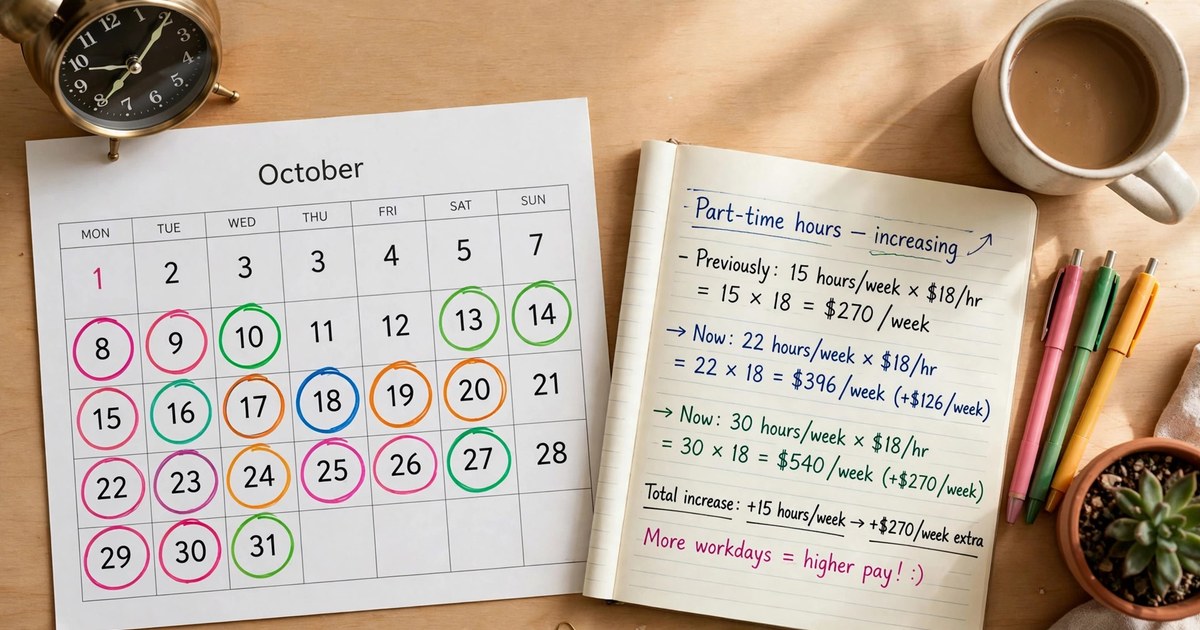
Clock and calendar showing increased part time working hours for a pay rise
If the increasing part time hours pay rise appeals to you — same job, more shifts, a bigger pay packet — you’re asking one of the most sensible questions in personal finance: what do you actually keep? Your contract might say your salary jumps by £6,000, but your bank balance tells a different story. Tax, National Insurance, pension contributions, and sometimes lost benefits all take their cut before the money reaches you.
The good news is that the maths is simpler than it looks. This guide walks through exactly how part-time pay scales when you add hours, works through two realistic examples (3 days to 4 days, and 22 hours to 30 hours), and shows you the tax “sweet spots” where each extra hour is worth the most. All figures use 2026/27 UK tax rules.
How your pay actually scales when you add hours
Part-time salaries in the UK are almost always calculated pro rata, meaning in proportion to a full-time equivalent. Your hourly rate doesn’t change when you go from 3 days to 4 days — your employer just pays you for more of those same hours.
The formula is dead simple:
New salary = full-time salary × (your new weekly hours ÷ full-time weekly hours)
So if the full-time salary is £32,000 for a 37.5-hour week, your hourly rate is £32,000 ÷ (37.5 × 52) = £16.41 per hour. That rate stays £16.41 whether you work 22 hours or 30 hours. The annual figures just scale with the hours.
A few things scale along with your salary that people often forget: holiday entitlement grows pro rata (a 4-day worker typically gets 22.4 days where full-timers get 28), and employer pension contributions rise too, since they’re a percentage of a now-bigger salary. That’s free money, even if it doesn’t show up in your monthly pay.
What doesn’t scale is your tax-free personal allowance. Everyone gets the same £12,570 personal allowance in 2026/27 regardless of hours worked. That matters, because it means a bigger slice of your pay falls into taxable territory as your hours increase — which is exactly why your take-home doesn’t rise pound-for-pound with your gross.
Increasing part time hours pay rise: the 3-day to 4-day example
Let’s make this concrete. You’re a marketing assistant on a full-time equivalent salary of £32,000, where full-time means 37.5 hours a week. You work 3 days (22.5 hours) and want to move to 4 days (30 hours).
Step 1: Work out both salaries.
3 days: £32,000 × (22.5 ÷ 37.5) = £19,200 per year
4 days: £32,000 × (30 ÷ 37.5) = £25,600 per year
Gross pay rise: £25,600 − £19,200 = £6,400 per year
Take-home rise: £21,951.60 − £17,343.60 = £4,608 per year (about £384 a month)
You keep 72p of every extra £1 — because 20% tax plus 8% National Insurance takes 28p.
That £384 a month is real, spendable money. Just budget on that figure rather than the £533 gross, and you won’t be caught out.
From 22 hours to 30 hours on a £45,000 full-time salary
Now a higher earner, where the numbers get bigger but the logic stays the same. You’re an IT support analyst: £45,000 full-time equivalent for 37.5 hours, going from 22 hours to 30 hours a week.
Step 1: Both salaries.
22 hours: £45,000 × (22 ÷ 37.5) = £26,400 per year
30 hours: £45,000 × (30 ÷ 37.5) = £36,000 per year
Take-home rise: £29,439.60 − £22,527.60 = £6,912 per year (£576 a month)
Again, 72p kept per extra £1.
Notice the pattern: as long as your salary stays between £12,570 and £50,270, every extra pound of gross pay puts 72p in your pocket. The percentage doesn’t change with the size of the jump — only when you cross a tax threshold. Want to check your own figures? Run the numbers on a pro rata calculator before you sign anything.
The tax “sweet spots”: where each extra hour is worth the most
Here’s the bit that surprises people. Not all extra hours are equally valuable. Depending on where your salary sits, the taxman takes a bigger or smaller bite of each additional pound. This table shows what you’d keep from an extra £1,000 of gross pay at different salary levels in 2026/27:
Your salary
Tax + NI on the extra £1,000
You keep
Under £12,570
£0
£1,000
£12,570 – £50,270
£280 (20% tax + 8% NI)
£720
£50,270 – £100,000
£420 (40% tax + 2% NI)
£580
£100,000 – £125,140
£620 (60% effective tax + 2% NI)
£380
Over £125,140
£470 (45% tax + 2% NI)
£530
A few things worth knowing about these bands:
The golden zone is under the personal allowance. If your rise takes you from, say, £10,000 to £13,000, the first £2,570 is completely tax-free. Best-value extra work you’ll ever do.
The standard zone (£12,570–£50,270) is where most part-timers live. You keep 72p per pound. Predictable, fair, and it covers the vast majority of hour increases.
The £100,000 trap is the one to watch. Between £100,000 and £125,140, your personal allowance shrinks by £1 for every £2 earned over £100,000. Combined with 40% tax and 2% National Insurance, your effective marginal rate hits 62% — so if a jump in hours would push you just over £100,000, consider salary sacrifice into your pension to stay below the line.
Crossing into the 40% band (£50,270) means you keep 58p per pound instead of 72p. Still more than half, and usually still worth it.
One more wrinkle: if you claim Universal Credit, extra earnings reduce your payment by 55p for every £1 above your work allowance — so check your own circumstances before deciding.
Overtime vs contracted hours: which is the better deal?
Sometimes you don’t need to change your contract at all — you can just pick up overtime. But overtime and contracted hours aren’t the same deal. Here’s how they compare:
Pay rate. Overtime is often paid at a premium — time-and-a-half (1.5×) is common in retail, hospitality and healthcare, sometimes double on Sundays or bank holidays. Contracted hours are always at your normal rate. At £16.41 an hour normally, overtime at £24.62 makes five overtime hours beat five contracted hours on pay alone.
Guarantee. Contracted hours are guaranteed income. Overtime can dry up without warning, and lenders look at contracted salary, not last year’s overtime.
Tax and National Insurance. There’s no special “overtime tax.” HMRC doesn’t care whether the pound came from contracted hours or overtime — it’s all taxed through PAYE at your marginal rate. The same 72p-in-the-pound rule applies.
Pension. This one varies. Some employers include regular overtime in pensionable pay; many don’t. Contracted hours always count — and with a typical 5% employer contribution, lots of non-pensionable overtime quietly costs you free money.
Holiday and sick pay. These are calculated on contracted hours. Overtime doesn’t increase your holiday entitlement.
The verdict? If overtime is reliably available at a premium rate, it’s often the best-paying way to earn more without changing your contract. But if you want stability, pension contributions, and income a lender will recognise, contracted hours win. Many people do a bit of both: bump the contract up to the hours they definitely want, then take overtime on top when it’s offered.
The bits that aren’t about money
A pay rise from extra hours isn’t just a spreadsheet exercise:
Childcare and commuting. An extra day might mean another day of nursery fees or £30–£50 in travel. If nursery costs £60 a day and your extra day nets £96 after tax, your true gain is £36 — still positive, but a different decision.
Energy. Four long days feel very different from three. Be honest about whether you’ll still have the life you want around the edges.
Contract changes are usually permanent. Some employers agree to a three-month trial at the new hours; many won’t. Ask before assuming you can drop back down.
Your right to request. After 26 weeks’ employment you can make a statutory flexible working request — which covers asking for more hours, not just fewer. Employers must consider it, though they can refuse for valid business reasons.
Frequently asked questions
If I go from part-time to full-time, will my take-home pay double?
No — it’ll rise by less than double. Doubling your hours doubles your gross pay, but the extra earnings are taxed at your marginal rate (usually 20% tax plus 8% National Insurance, so you keep 72p per extra pound). Your personal allowance of £12,570 stays the same, so a bigger share of your total pay becomes taxable. Expect your take-home to rise by roughly 60–75% of the gross increase, depending on your tax band.
Will increasing my hours affect my benefits?
It can. Universal Credit is reduced by 55p for every £1 you earn above your work allowance, so some of your pay rise is offset by lower benefit payments. Tax credits work similarly. On the other hand, working 16+ or 30+ hours a week can qualify you for extra help, such as the childcare element of Universal Credit or 30 hours of free childcare for 3- and 4-year-olds in England. Check a benefits calculator with your exact figures before deciding.
Do I pay more National Insurance if I work more hours?
Yes, in the same way as income tax. Employee National Insurance is 8% on earnings between £12,570 and £50,270 a year, and 2% above that. There are no extra charges for part-timers — the thresholds are annual, so they apply to your total yearly pay however your hours are spread.
Is it better to do overtime or increase my contracted hours?
Overtime usually pays more per hour (often time-and-a-half), but it’s not guaranteed, doesn’t always count towards your pension, and lenders ignore it. Contracted hours pay your normal rate but give you guaranteed income, pension contributions, more holiday, and a salary figure you can use on applications. If the overtime is regular and reliable, take it; if you want certainty, change the contract.
Can my employer refuse to give me more hours?
They can, but they must handle your request properly. If you’ve worked there for at least 26 weeks, you have the right to make a statutory flexible working request, which covers asking for more hours. Your employer has to consider it and can only refuse for specific business reasons, like extra costs or an inability to reorganise the work. It costs nothing to ask — put it in writing and keep a copy.
Does increasing my hours change my hourly rate?
No. Your hourly rate stays exactly the same; you’re simply paid for more hours at that rate. The only common exception is if your employer’s pay bands have an hours threshold (rare), or if the extra hours qualify for overtime premiums or shift allowances that your normal hours don’t.
Conclusion
Increasing your part-time hours is one of the most straightforward pay rises available — no negotiation theatrics, no job hunt, just more of the hours you’re already paid for. For most people the maths is firmly in your favour: between £12,570 and £50,270 you’ll keep 72p of every extra pound, and anything under the personal allowance is yours in full.
The examples tell the story. Three days to four on a £32,000 full-time equivalent: about £384 extra a month in your pocket. Twenty-two to thirty hours on £45,000: roughly £576 a month. Meaningful sums — a holiday fund, a dent in the mortgage, or just breathing room.
Go in with your eyes open: check which tax band the extra pay lands in, subtract added childcare or travel costs, and decide whether you want the certainty of contracted hours or the premium rates of overtime. Do that, and the extra hours feel like a choice, not a gamble.