A 20-hour week is one of the most advertised part-time patterns in Britain. Retail rotas, care shifts, admin roles, and school-hours jobs all use it — and adverts nearly always quote the full-time equivalent salary, leaving you to work out what 20 hours actually pays. A pro rata salary calculator for 20 hours a week answers that question exactly, converting the headline figure into your gross annual, monthly, and weekly pay.
This guide works through the calculation for a UK audience: the FTE fraction at both common full-time standards (37.5 and 40 hours), the formula, worked examples with pound figures, pro-rated holiday entitlement, overtime and extra-hours pay, and the advert traps to avoid.
Pro Rata Salary Calculator for 20 Hours a Week: The Quick Answer
If full-time at your employer is 37.5 hours, a 20-hour week is 0.533 of full-time. On a £24,000 full-time salary, a pro rata salary calculator for 20 hours a week gives £12,800 a year gross, or £1,066.67 a month. If full-time is 40 hours, the fraction is exactly half — on £30,000 full-time that is £15,000 a year, or £1,250 a month. Your holiday entitlement is reduced by the same fraction: 5.6 weeks × 20 hours = 112 hours of statutory annual leave a year.
The single most important thing to check is which full-time standard your employer uses. The difference between 37.5 and 40 changes your fraction from 0.533 to 0.5 — about £800 a year on a £24,000 salary.
20 Hours vs Full-Time: What Fraction Are You?
The UK has no legal definition of a full-time week, so the “of what” in your pro rata calculation depends on your employer. The two standards you will meet most often are 37.5 hours (offices, the NHS, councils, charities) and 40 hours (retail, hospitality, warehousing, manufacturing).
Against 37.5 hours: 20 ÷ 37.5 = 0.5333. Against 40 hours: 20 ÷ 40 = 0.5 exactly. Against 35 hours: 20 ÷ 35 = 0.571. That last case matters — if the advert says “£26,000 FTE” and full-time is 35 hours, your 20-hour pro rata figure is £14,857, not the £13,000 you would get against a 40-hour standard.
Always find the full-time hours in the job advert or contract before accepting a figure. If the advert does not state them, ask the recruiter: “What are the contracted full-time hours for this role?” The answer changes your pay.
How to Use the Pro Rata Salary Calculator for 20 Hours a Week Formula
The formula behind every pro rata salary calculator for 20 hours a week is one line:
Pro rata salary = full-time salary × (20 ÷ full-time weekly hours)
Step by step at 37.5 hours:
- Take the full-time salary, for example £24,000.
- Divide 20 by the full-time hours: 20 ÷ 37.5 = 0.5333.
- Multiply: £24,000 × 0.5333 = £12,800.
- Divide by 12 for monthly gross: £12,800 ÷ 12 = £1,066.67.
- Divide the annual figure by 52 for weekly gross: £12,800 ÷ 52 = £246.15.
At 40 hours the arithmetic is cleaner: £30,000 × 0.5 = £15,000 a year, £1,250 a month, £288.46 a week. If you would rather skip the manual steps, our free pro rata salary calculator runs the same formula for any hours you enter.
Worked Examples: What 20 Hours a Week Pays
The table shows both common full-time standards. All figures are gross, before tax, National Insurance, and pension deductions.
| Full-time salary | At 37.5h full-time (0.533 FTE) | At 40h full-time (0.5 FTE) |
|---|---|---|
| £22,000 | £11,733 / £977.78 per month | £11,000 / £916.67 per month |
| £24,000 | £12,800 / £1,066.67 per month | £12,000 / £1,000.00 per month |
| £26,000 | £13,867 / £1,155.56 per month | £13,000 / £1,083.33 per month |
| £28,000 | £14,933 / £1,244.44 per month | £14,000 / £1,166.67 per month |
| £30,000 | £16,000 / £1,333.33 per month | £15,000 / £1,250.00 per month |
| £35,000 | £18,667 / £1,555.56 per month | £17,500 / £1,458.33 per month |
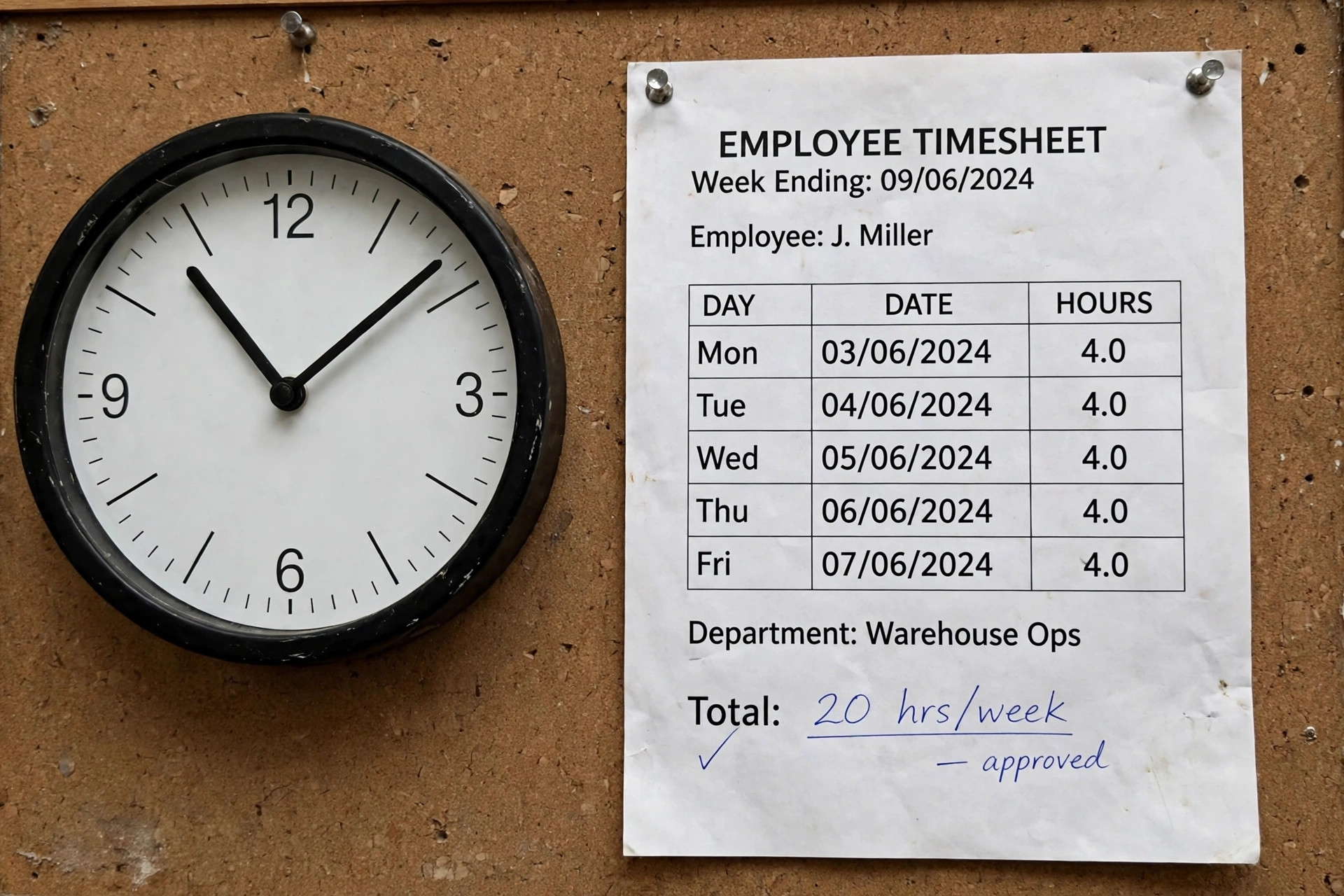
Take the £24,000 example at 37.5 hours in full: 20 ÷ 37.5 = 0.5333, then £24,000 × 0.5333 = £12,800 a year. Monthly, that is £1,066.67; weekly, £246.15. The £30,000 example at 40 hours is the tidy one: exactly half, £15,000 a year, £1,250 a month, £288.46 a week.
The hourly rate check works in both directions. £24,000 over a 37.5-hour week is £24,000 ÷ (37.5 × 52) = £12.31 an hour; 20 hours at £12.31 is £246.15 a week — the same answer. And if the job is advertised at an hourly rate, the route is simpler still: hourly rate × 20 = weekly pay. At £13.50 an hour, that is £270 a week, or £1,170 a month (£270 × 52 ÷ 12).
Your Holiday Entitlement on 20 Hours a Week
Statutory minimum annual leave is 5.6 weeks a year for a full-time worker. For part-timers, the cleanest way to pro-rate it is in hours: 5.6 weeks × 20 hours = 112 hours of statutory leave a year. Hours avoid all the confusion of different shift patterns — whether you work five 4-hour days or two 10-hour days, 112 hours is 112 hours.
If your employer expresses leave in days, the number of days depends on your shift length. On five 4-hour days, 112 hours ÷ 4 = 28 days of leave, which sounds generous until you realise each one is only 4 hours. On two 10-hour days, 112 ÷ 10 = 11.2 days. Both are the same entitlement; the day count just reflects how you burn through it. Always think of part-time holiday in hours first.
The same hours logic applies to bank holidays. The 8 standard bank holidays pro-rate to 8 × (20 ÷ 37.5) = 4.27 days of a full-time day — but convert it: 8 × 7.5 × 0.5333 = 32 hours of paid bank-holiday leave a year. A bank holiday on a working day comes out of that allowance; one on your day off costs you nothing. If your employer gives bank holidays on top of the 5.6-week minimum rather than inside it, check whether that generosity is also pro-rated — it usually is.
Overtime and Extra Hours on a 20-Hour Contract
Most 20-hour contracts allow, and many roles regularly require, extra hours. How those hours are paid depends on your contract, and the difference is worth understanding before you agree to cover a shift.
The most common arrangement in the UK is that extra hours up to the full-time threshold are paid at your normal hourly rate, with premium overtime rates — typically time-and-a-half — applying only beyond full-time hours. On a £12.31 hourly rate, picking up an extra 5-hour shift pays £61.55 at standard rate. A colleague contracted at 37.5 hours doing the same extra shift might get £92.33 at time-and-a-half. Same work, different rate: that is standard practice, not a mistake, provided your contract says so.
A second arrangement, common in retail and care, pays all extra hours at a flat rate regardless of the threshold. A third pays a premium on any hours above your contracted 20, which is the most favourable and worth asking about. Whichever applies, two protections hold everywhere: your average pay must not fall below the National Minimum Wage, and you cannot be forced to average more than 48 hours a week unless you have signed an opt-out.
How Employers Advertise 20-Hour Roles
Job adverts handle 20-hour pay in three different ways, and misreading which one you are looking at is the fastest route to a nasty surprise on the first payslip.
First, the FTE salary: “£24,000 per annum (pro rata)”. This is the full-time figure; your actual pay is £12,800. Second, the actual salary: “£12,800 per annum for 20 hours per week”. No further calculation needed. Third, the hourly rate: “£12.31 per hour, 20 hours per week”. Multiply out and you get £12,800 a year.
The danger is the advert that says “£24,000 per annum” with the “pro rata” tucked away in small print, or missing entirely until the interview. If an advert gives a salary without specifying, assume it is the FTE figure and ask.
Bonus and commission schemes need the same scrutiny. If full-timers get a £2,000 annual bonus, check whether part-timers get the full amount or a pro-rated £1,067.
Take-Home Pointers: Tax, National Insurance, and Pension
At £12,800 a year you sit just above the £12,570 personal allowance and National Insurance primary threshold for 2026/27. In practice that means a tiny amount of income tax and employee National Insurance — roughly £46 of income tax a year on the £230 above the allowance, plus a small NI charge. On the £15,000 example, expect basic-rate tax at 20% on the slice above £12,570 and employee NI at the standard rate on earnings above the threshold. All figures are illustrative for 2026; thresholds move, so treat them as a guide, not a payslip.
Pensions apply in full at these earnings. Automatic enrolment triggers at £10,000, which both examples clear, so you will be enrolled unless you opt out. The minimum total contribution is 8% of qualifying earnings — at least 3% from your employer, the rest from you with tax relief. On £12,800, your share is around £25–30 a month, and the employer adds roughly the same again on top.
One more point in your favour: because you are above the lower earnings limit (around £6,396), every year at 20 hours counts as a qualifying year towards the State Pension, exactly like full-time work.
Common Mistakes to Avoid
The biggest mistake is assuming the full-time standard instead of checking it. A £26,000 FTE advert means £13,867 at 20 hours against 37.5, but only £13,000 against 40 — a £867 gap from one number the advert may not state.
The second is confusing the FTE figure with the actual figure, especially in adverts that quote “per annum” without the words “pro rata”. Get the recruiter to confirm in writing which figure is yours.
The third is forgetting that the fraction must follow your hours, not a neat day count. Small differences in paid hours compound over a year.
Finally, do not accept a verbal pro rata figure without seeing it on the offer letter. “About £13,000” has a habit of becoming £12,800 when payroll runs the exact fraction. The written figure is the one that counts.
Other working patterns: 24 hours a week · 30 hours a week · 37.5-hour week · 40-hour week · 2 days a week · 3 days a week · 4 days a week · 37.5 vs 40 hours · part-time hours tables · pro rata hours · days vs hours · examples by days per week
Frequently Asked Questions
What is £25,000 pro rata for 20 hours a week? Against 37.5 full-time hours it is £13,333 a year gross (£1,111.11 a month). Against 40 hours it is £12,500 a year (£1,041.67 a month).
Is 20 hours a week half-time? Only where full-time is 40 hours. Against the 37.5-hour standard used by much of the UK public sector and office work, 20 hours is 0.533 FTE — slightly more than half.
How much holiday do I get working 20 hours a week? The statutory minimum is 112 hours a year (5.6 weeks × 20 hours). How many “days” that equals depends on your shift length.
Do I get overtime pay for extra hours? Usually extra hours up to the full-time threshold are paid at your normal hourly rate, with premium rates only beyond full-time hours. Check your contract — some employers pay a premium on all hours above your contracted 20.
Will I pay tax on £12,800 a year? A small amount. For 2026/27 the personal allowance and NI primary threshold are £12,570, so only the £230 above that is taxed — roughly £46 of income tax a year plus a small NI charge.
Can my employer change my hours from 20 to more? Only with your agreement, unless your contract includes a variation clause. Permanent changes to contracted hours require consultation, and you can decline.
Twenty hours a week sits in a sweet spot: enough hours to clear the pension auto-enrolment threshold and build a full State Pension record, with take-home pay only lightly touched by tax. Just make sure you know which full-time standard your employer uses, confirm whether the advertised salary is FTE or actual, and get the exact figure in writing.